AI receptionists are changing how businesses manage customer inquiries, capture leads, and convert interest into action. But in 2026, answering the phone is only part of the equation.
For years, the role of a receptionist was relatively straightforward: answer incoming calls, respond to questions, schedule appointments, and connect customers with the right person.
Artificial intelligence has made it possible to automate many of these responsibilities. Today, AI receptionists can handle routine inquiries, provide information, and assist customers around the clock, without requiring additional staff.
Yet much of the conversation surrounding AI receptionists remains focused on a single channel: the telephone.
That definition is becoming increasingly restrictive.
Customers now discover businesses, research services, compare options, and make purchasing decisions across a growing number of digital touchpoints. They browse websites, engage with social media content, follow links from Instagram profiles, and expect information to be available whenever they need it.
For businesses, the challenge is no longer simply answering every call. It is ensuring that customer interest can become a meaningful interaction, regardless of when or where that interest originates.
The next generation of AI receptionists must do more than respond to inquiries. They must help businesses turn customer engagement into measurable outcomes.
What Is an AI Receptionist?
An AI receptionist is an artificial intelligence-powered assistant designed to manage customer interactions, answer questions, and guide users toward relevant services or next steps.
Traditional AI receptionists primarily operate through voice-based systems. They answer incoming calls, collect information, route inquiries, and, when integrated with scheduling software, help customers book appointments.
These capabilities remain valuable, particularly for businesses that receive significant call volumes.
However, a modern AI receptionist can extend beyond telephone support to provide an interactive customer experience across websites, social media landing pages, and other digital channels.
Rather than functioning exclusively as an automated answering service, it can serve as an always-available point of contact, helping customers access information, explore offerings, and take action.
The distinction matters because the effectiveness of an AI receptionist depends not only on what it can do, but also on whether it is available where customers are already engaging with the business.
Why Traditional AI Receptionists Are No Longer Enough
Consider how a potential customer interacts with a local business.
Someone researching a hair salon may discover it through Instagram, browse photos of recent work, and visit the salon's website to compare services and pricing.
A prospective gym member might explore membership options late in the evening, after work.
A customer considering a professional service may have several questions before feeling comfortable submitting an inquiry.
In each scenario, the business has already attracted a potential customer. The challenge is converting that initial interest into a meaningful next step.
If the information is difficult to find, the booking process is unclear, or the customer cannot get an immediate answer, the interaction may end before the business even knows it occurred.
This creates a significant limitation for traditional AI receptionist solutions.
A phone-based AI receptionist can answer a call that comes in. It cannot engage a potential customer who never intended to call in the first place.
For businesses investing in websites, social media, and digital advertising, that distinction has important implications.
The value of an AI receptionist increasingly lies in its ability to support the entire customer journey, from the first question to the decision to book, purchase, or inquire.
The Hidden Opportunity in After-Hours Customer Engagement
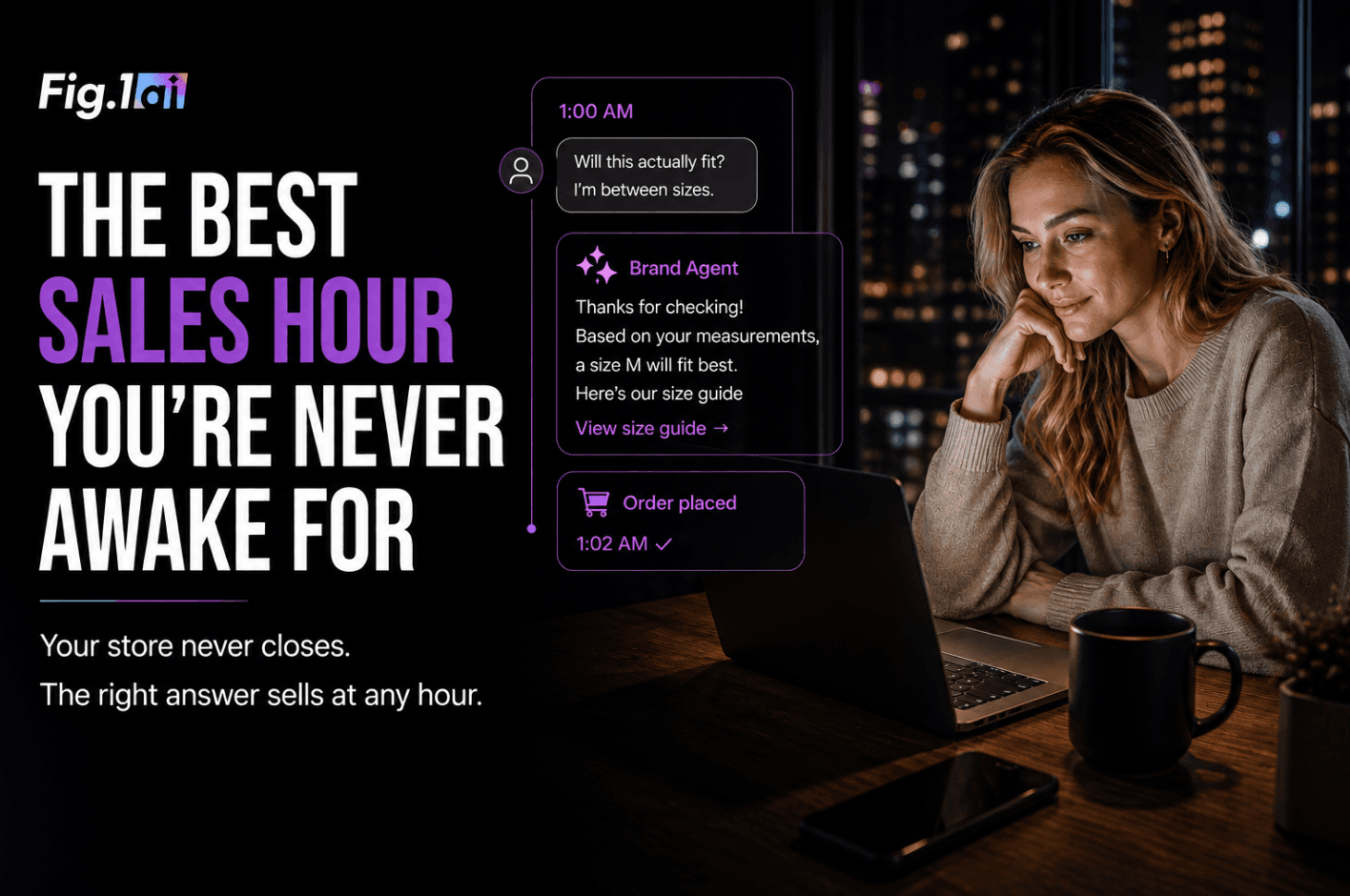
One of the most compelling applications of AI receptionists is their ability to engage customers outside normal business hours.
Small businesses face a particular challenge here.
Their websites and social media profiles remain accessible around the clock, but their teams do not. Customer interest can emerge at any time, even when no one is available to respond.
A recent implementation at The Lounge by Glimmer, a boutique hair salon in Woodridge, Illinois, illustrates the scale of this opportunity.
The salon operates three days per week, from Tuesday through Thursday. Like many service businesses, it relies on digital channels to showcase its work, communicate with clients, and generate appointments.
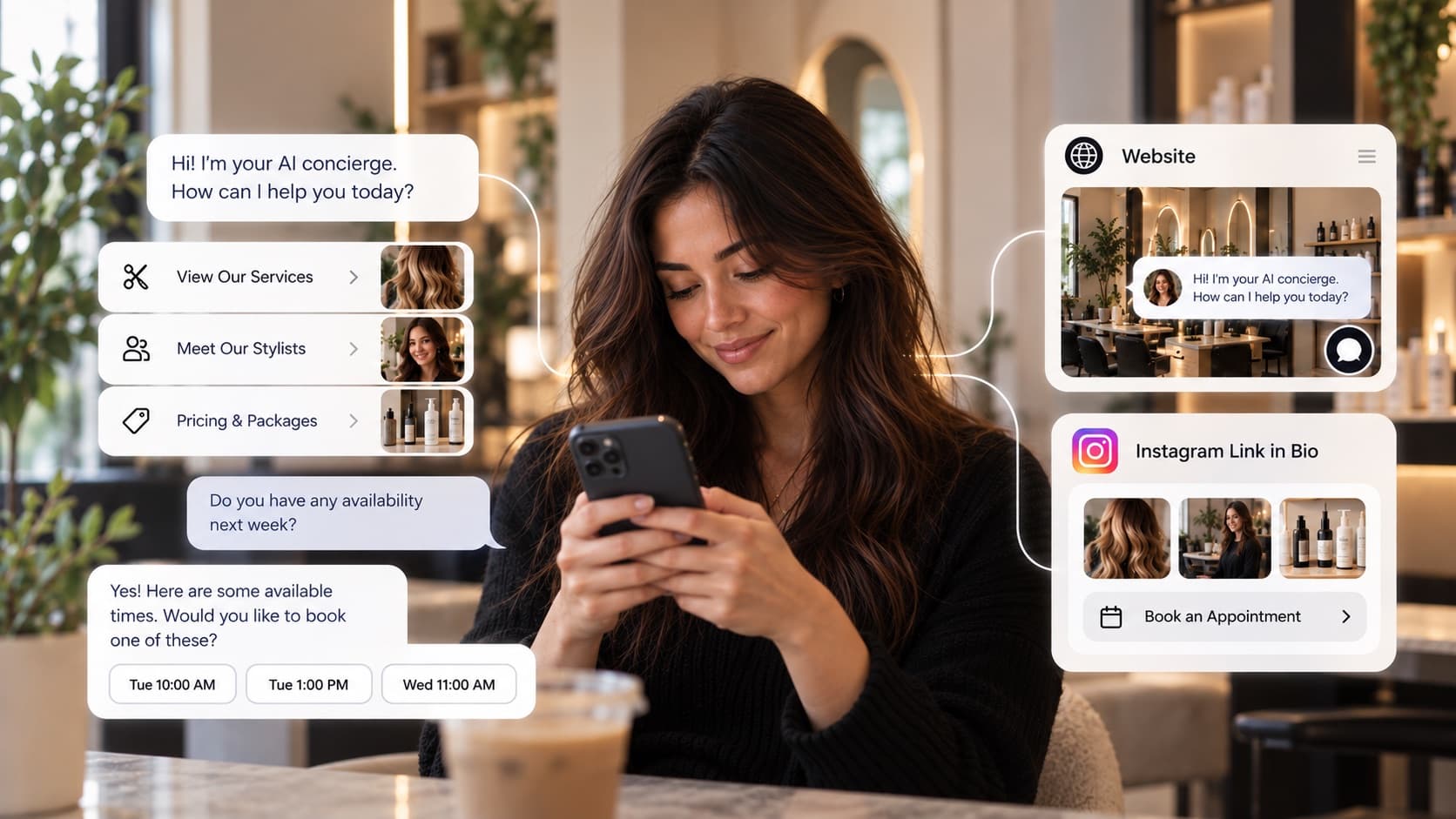
To extend customer engagement beyond its operating hours, Glimmer introduced a Fig1.ai-powered AI concierge accessible through its website and Instagram bio link.
The Results: 60 Days of AI-Powered Customer Engagement
During its first 60 days, the AI concierge recorded:
- 325 customer conversations, with engagement increasing month over month.
- 47% of conversations occurring on days the salon was closed, demonstrating substantial demand outside operating days.
- 6 PM as the busiest hour for customer engagement, highlighting the importance of evening accessibility.
- 159 opens of the appointment-booking card, making booking one of the most frequently accessed resources.
- 763 views of service, stylist, and pricing cards, reflecting customer interest in exploring the salon's offerings.
- No additional staff hours required to support these interactions.
The most revealing finding is not simply the volume of conversations.
It is when those conversations occurred.
Nearly half of all interactions took place on days when the salon was not operating. Without an automated digital engagement experience, these customers would have needed to find information independently, wait for a response, or return during business hours.
The AI concierge created an immediate point of engagement instead.
It also provided insight into customer behavior that would otherwise have been difficult to observe, including which services attracted attention, which information customers accessed, and when they were most likely to engage.
Importantly, booking-card opens indicate interest, not confirmed appointments. Nevertheless, they demonstrate how an AI receptionist can move beyond answering questions to directing customers toward conversion opportunities.
For Glimmer, the value of AI was not replacing the front desk. It was extending the salon's ability to engage customers beyond the hours its team was available.
Five Essential Capabilities of an AI Receptionist in 2026
Not all AI receptionist solutions offer the same functionality.
Businesses evaluating these tools should look beyond basic automation and consider how effectively a solution supports the customer experience and the organization's commercial objectives.
1. Accurate, Contextual Answers Based on Your Business
A useful AI receptionist should understand the business it represents.
That includes services, pricing, operating hours, policies, frequently asked questions, and other information customers need to make decisions.
Rather than relying on generic responses, modern AI systems can use a business's existing knowledge base, including website content, documents, service descriptions, and other approved materials.
This enables more relevant interactions while reducing the burden of answering repetitive questions.
For a salon, that might mean explaining the difference between services, providing information about individual stylists, or clarifying cancellation policies.
For a fitness studio, it could mean helping a prospective member understand class options, membership packages, or what to expect during their first visit.
Accuracy is critical. An AI receptionist should also recognize when information is unavailable or when a question requires human assistance.
2. Interactive Experiences That Go Beyond Text
Traditional chatbots primarily communicate through written responses.
While text remains useful, it is not always the most effective way to present information or guide customer decisions.
An AI receptionist equipped with rich media capabilities can incorporate images, videos, interactive cards, and direct links into the conversation.
A customer asking about a service might receive a concise explanation alongside relevant imagery, pricing information, and a booking option.
Someone exploring a fitness program could be introduced to a trainer through video rather than a lengthy written description.
These experiences make it easier for customers to evaluate options without navigating multiple pages or searching for information independently.
At Glimmer, customers viewed service, stylist, and pricing cards 763 times during the first 60 days.
That engagement illustrates the importance of presenting information in a format that is both accessible and actionable.
3. A Clear Path From Conversation to Conversion
Answering questions is valuable, but it should not be the endpoint of the customer experience.
An effective AI receptionist helps customers progress toward the next logical action.
Depending on the business, that might include scheduling an appointment, requesting a consultation, exploring a product, submitting a lead form, or contacting a team member.
The objective is not to force every interaction into a sale.
It is to remove unnecessary friction between customer interest and the action the customer wants to take.
This is particularly relevant for service businesses, where prospective customers often need reassurance or clarification before committing to an appointment.
By addressing those questions and presenting a relevant next step, an AI receptionist can help bridge the gap between discovery and conversion.
4. Consistent Engagement Across Digital Channels
Customers rarely interact with a business through a single channel.
They may discover a brand through social media, visit its website later, and return through a different digital touchpoint when they are ready to make a decision.
Maintaining accurate, consistent information across these experiences is essential.
A modern AI receptionist should be deployable across multiple customer-facing channels while drawing from a centralized source of business information.
For example, the same AI concierge can support visitors on a company's website and customers accessing an interactive experience through its Instagram bio.
This approach reduces the need to maintain separate experiences and helps ensure customers receive consistent information regardless of their entry point.
It is important to distinguish an AI-powered link-in-bio experience from direct Instagram DM automation. Both can support customer engagement, but they operate through different interfaces and may require different integrations.
For small businesses with limited resources, centralized management can be especially valuable.
5. Intelligent Human Handoff and Actionable Analytics
AI receptionists should complement human teams, not attempt to replace human judgment in every situation.
Some inquiries require empathy, discretion, or specialized knowledge. Others involve complex scheduling, complaints, or circumstances that fall outside the AI's available information.
A well-designed system should recognize these limitations and provide a clear route to human assistance.
Equally important is understanding what happens during customer interactions.
Conversation analytics can reveal recurring questions, popular services, engagement patterns, and potential points of friction.
These insights can inform more than customer support.
They can help businesses improve website content, refine service descriptions, identify customer interests, and make more informed marketing decisions.
An AI receptionist therefore becomes both a customer-facing engagement tool and a source of useful business intelligence.
How Much Does an AI Receptionist Cost in 2026?
AI receptionist pricing varies considerably depending on the type of solution, the channels supported, usage limits, and available features.
Voice-based AI receptionist services commonly advertise plans ranging from approximately $25 to $300 per month, although pricing structures and usage allowances differ by provider.
Some charge monthly subscriptions, while others incorporate per-minute fees or additional costs for integrations and advanced functionality.
Digital AI receptionists may use different pricing models, often based on conversation volume, supported channels, and engagement capabilities.
Fig1.ai Pricing
Fig1.ai offers AI-powered customer engagement solutions designed for businesses that want to extend their digital presence beyond static websites and traditional chatbots.
Current plans include:
| Plan | Monthly Price | Key Features |
|---|---|---|
| Starter | $59 | Website AI concierge, up to 500 conversations per month, rich media cards, and a business knowledge base |
| Pro | $129.99 | Up to 2,000 conversations per month, multilingual support, and an AI-powered link in bio |
| AI Link in Bio | $15 | Standalone interactive link-in-bio experience |
Plans include a 14-day free trial with no setup fee.
Evaluating the Return on Investment
The cost of an AI receptionist should be considered in relation to the business outcomes it supports.
For an appointment-based business, the relevant questions include:
- How many customer inquiries occur outside operating hours?
- How much potential revenue is associated with an additional booking?
- How much staff time is spent answering repetitive questions?
- How effectively does the current website guide visitors toward appointments or inquiries?
- What customer insights are currently unavailable?
For example, a salon with an average appointment value of $150 would need approximately one additional appointment per month to offset a $59 subscription.
That is a break-even illustration, not a guaranteed result. Actual returns depend on conversion rates, service margins, customer behavior, and other business-specific factors.
Glimmer's 159 booking-card opens over 60 days provide a useful indication of customer interest, but confirmed booking and revenue data would be required to calculate a precise return on investment.
The broader opportunity is to improve the effectiveness of the digital traffic a business is already attracting.
AI Receptionist vs. Human Receptionist: Understanding the Difference
The question of whether AI will replace human receptionists often overlooks the most practical application of the technology.
For many small businesses, AI is most valuable when it extends the capabilities of an existing team.
Human receptionists provide qualities that automated systems cannot fully replicate, including nuanced judgment, relationship-building, and the ability to navigate sensitive or unusual circumstances.
These capabilities remain important, particularly in businesses where personal relationships are central to the customer experience.
AI, meanwhile, offers advantages in availability, consistency, and the ability to respond to routine inquiries at scale.
It can provide information outside business hours, support multiple simultaneous conversations, and direct customers toward relevant resources without adding to the workload of front-desk staff.
The two approaches are therefore not mutually exclusive.
A human receptionist provides the personal attention customers value. An AI receptionist helps ensure that attention is not limited by the business's operating hours.
For businesses without dedicated reception staff, AI can also provide an accessible first point of contact that would otherwise be difficult to maintain.
The goal should be to create a more responsive customer experience, not simply to automate an existing role.
How to Implement an AI Receptionist for Your Small Business
Introducing an AI receptionist does not necessarily require a complex technical implementation.
For businesses using a no-code platform, the process can begin with existing information and customer-facing resources.
Step 1: Organize Your Business Information
Start by identifying the questions customers ask most frequently.
Gather service descriptions, pricing, hours, policies, booking links, and other essential information.
Existing website pages, PDFs, menus, and service documents can provide much of the initial knowledge base.
Step 2: Configure the AI Experience
Upload the relevant information and establish how the AI should communicate.
Its tone should reflect the business's brand and customer expectations.
A luxury salon, for example, may benefit from a different communication style than a high-energy fitness studio.
Define clear boundaries for questions the AI cannot answer and establish an appropriate path to human support.
Step 3: Build Interactive Customer Journeys
Identify the actions customers are most likely to take.
These may include exploring services, comparing options, viewing team profiles, or scheduling appointments.
Use interactive cards, images, and relevant links to make those actions easy to complete.
Step 4: Test Accuracy and Usability
Before launching, test the experience from a customer's perspective.
Ask common questions, unusual questions, and questions involving information the AI should not assume.
Verify that pricing is accurate, links work correctly, and human handoff instructions are clear.
Step 5: Launch and Optimize
Deploy the AI receptionist on your website and other supported digital touchpoints.
Then review conversation data regularly.
Pay particular attention to when customers engage, what they ask, which resources they access, and where conversations lead.
These insights can help improve both the AI experience and the broader customer journey.
The Future of AI Receptionists Is Customer Engagement
The AI receptionist market is evolving alongside customer expectations.
Businesses no longer need to choose between being available during operating hours and leaving customers to navigate their digital presence independently.
AI makes it possible to provide immediate, contextual assistance at moments when customer interest is already present.
But availability alone is not the defining advantage.
The more significant opportunity is connecting information, engagement, and action within a single experience.
For a salon, that means helping someone discover the right service and find the booking page.
For a fitness studio, it means answering membership questions and guiding a prospective member toward a trial.
For a professional services business, it means providing relevant information and making it easier to request a consultation.
The Lounge by Glimmer demonstrates what this can look like in practice: 325 customer conversations in 60 days, nearly half occurring on days the salon was closed, with hundreds of interactions involving services, pricing, stylists, and booking resources.
These are not simply automated responses. They represent measurable customer engagement that can inform business decisions and create opportunities for conversion.
In 2026, the question is no longer whether an AI receptionist can answer your customers. It is whether your business is equipped to engage them wherever and whenever they are ready.
See What an AI Receptionist Can Do for Your Business
Discover how The Lounge by Glimmer used Fig1.ai to extend customer engagement beyond operating hours and make its digital presence more interactive.
Explore the Glimmer Case Study
Or experience the platform for yourself.
No setup fee. No coding required.