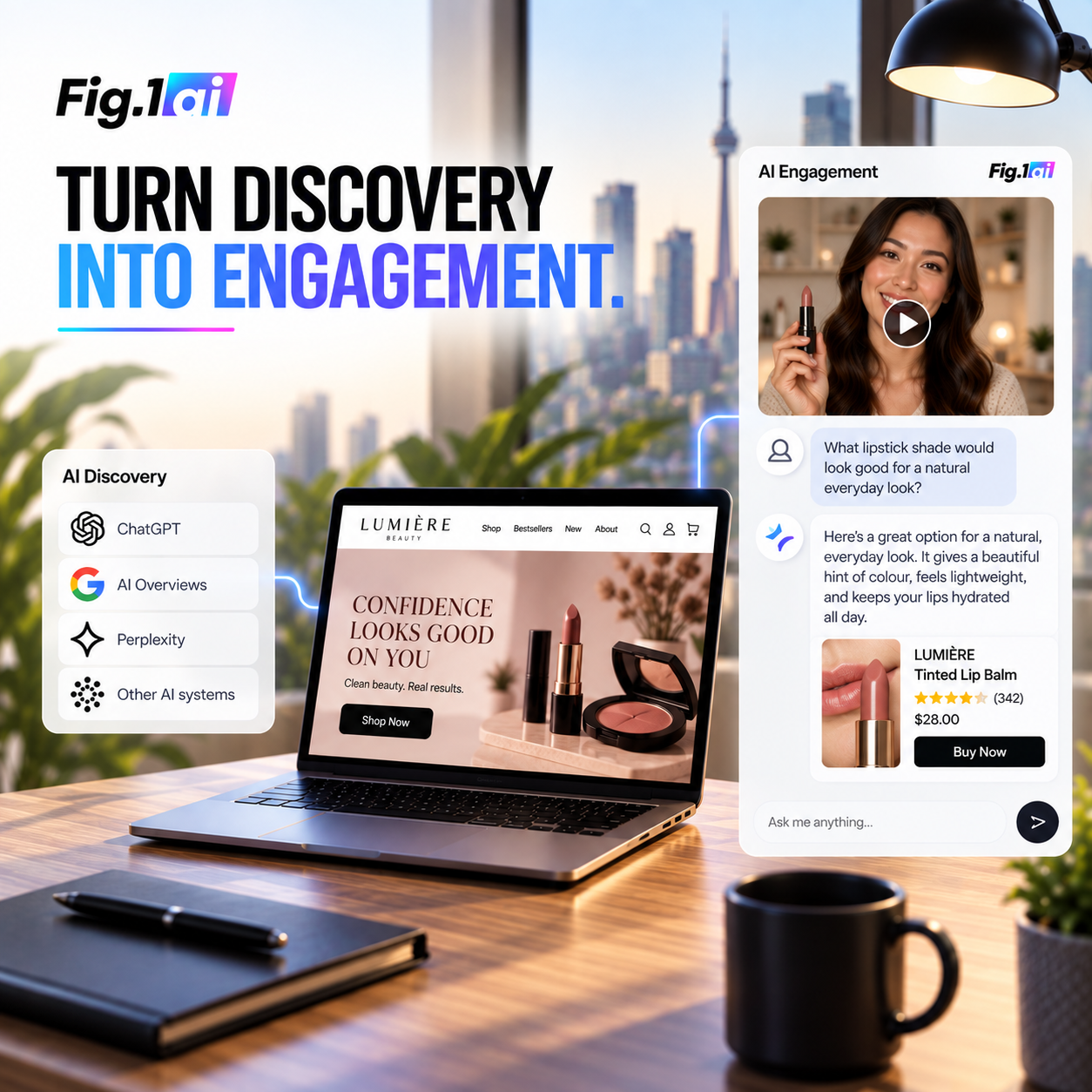
AI Discovery Is Only Half the Equation
Brands are racing to be discovered by AI. The next opportunity is creating an experience that can engage customers once they get there.
There’s an entirely new discipline forming around one increasingly important question:
How does your brand get discovered by AI?
Call it AEO, GEO, AI SEO or whatever acronym comes next.
The terminology is still evolving, but the objective is clear. Brands want to be cited by ChatGPT, surfaced in AI Overviews, referenced by Perplexity and recommended by the AI systems people are increasingly using to research products and make decisions.
And they should.
As AI changes how people discover brands, products and services, visibility within these systems is going to become an increasingly important part of marketing.
But discovery is only half the equation.
Because getting someone to your brand and knowing what to do once they’ve discovered it are two very different things.
Discovery creates the opportunity
For years, digital marketing has focused heavily on acquisition.
SEO helped people find you through search. Paid media put you in front of the right audience. Social created awareness. Landing pages captured the traffic those channels generated.
AI is creating another discovery layer.
Instead of searching through ten blue links, someone might ask an AI assistant:
- What’s the best wine to pair with Thanksgiving dinner?
- Which running shoe is best for someone with flat feet?
- What’s the best way to sell my home without paying traditional commission?
Increasingly, AI will help determine which brands become part of that answer.
That’s a meaningful shift.
And there is real value in making sure your brand is one of them.
But a recommendation, citation or referral from an AI system is only the beginning.
Once someone discovers your brand, the experience you give them matters just as much.
Discovery is where the customer journey starts
Imagine someone discovers your brand through an AI recommendation.
They’re already looking for something. They’re researching, comparing options or trying to make a decision. And chances are, they still have questions.
They may want to know:
- Is this right for me?
- What’s the difference between these two products?
- Is it available?
- Can I get it by Friday?
- What would you recommend based on what I need?
This is where the experience often breaks down.
The AI that helped them discover your brand may have understood exactly what they were looking for. But once they reach your website, they’re often back to navigating menus, searching through product pages, opening an FAQ or filling out a contact form.
The intelligence that shaped the discovery experience suddenly disappears.
That’s the gap.
Discovery did its job. It connected someone with real intent to your brand.
Now the brand needs to continue that experience.
From traffic to interaction
We’ve seen versions of this problem before.
Companies spend enormous amounts of money generating demand and driving traffic, only to make customers work once they reach the brand.
AI raises the stakes because it changes people’s expectations.
If someone can have a natural conversation with an AI assistant while researching a purchase, why should that experience become less intelligent when they reach the company that actually sells the product?
The next generation of brand websites shouldn’t simply contain information.
They should be able to use that information to engage.
A customer should be able to ask a question and get a useful, specific answer immediately.
Not a list of links.
Not a generic FAQ.
Not a promise that someone will respond tomorrow.
An actual answer.
Discovery + engagement
That’s why we don’t see AI discovery and AI engagement as competing ideas.
They’re two parts of the same customer journey.
Discovery helps the right people find you.
Engagement helps them understand, decide and act once they do.
The brands investing in AI visibility today are making an important bet on how discovery is changing.
But there’s a second opportunity emerging alongside it: creating a brand experience capable of responding intelligently when that discovery succeeds.
That’s what we’re building at Fig.1 AI.
Our Brand Agents are designed to sit on the brand side of that equation — trained on the brand’s actual products, content and knowledge so customers can ask questions and receive useful answers in real time.
Because the goal shouldn’t simply be to appear in an AI-generated answer.
The goal is to make something happen when you do.
Get discovered. Then be ready to engage.