Every business has a website. And nearly every business is quietly disappointed by it.
Ask any sales leader to rate their team, and the underperformers get coached, retrained, or replaced. But the one “salesperson” every company already has — live, top of funnel, working around the clock — gets a pass. Nobody manages it. Nobody holds it accountable for conversion. That salesperson is your website, and by any normal standard, it’s the weakest performer on the team.
A brochure with a search bar
Here’s what a website actually does, if we’re honest about it. It loads. It displays some words and pictures that were decided on months ago. If a visitor has a question the page doesn’t already answer, the website has no answer — it just sits there. It doesn’t ask what the visitor needs. It doesn’t remember they were here yesterday. It doesn’t follow up next week. It doesn’t get better at its job over time.
That’s not a salesperson. That’s a brochure with a search bar.
Every other person on a sales team does the opposite of all of that: they respond in seconds, they adapt the pitch to the person in front of them, they follow up, and they report back on what worked. We never asked the same of the website, because until recently, the website wasn’t capable of it.
What changes when the site can talk back
The shift is simple to state and significant in practice: a website that can talk back, remember, adapt, and follow up stops being a static asset and starts being a working member of the team.
Talk back means answering a real question in the moment, not routing someone to a contact form. Remember means recognizing a returning visitor and picking up where the conversation left off, instead of starting cold every time. Adapt means the conversation bends toward what the visitor actually cares about — pricing for one person, specs for another — instead of forcing everyone down the same script. Follow up means an interested visitor doesn’t just evaporate; the site captures the lead and keeps the thread alive.
None of that requires a bigger team. It requires the site itself to behave differently.
What we mean by a Brand Agent
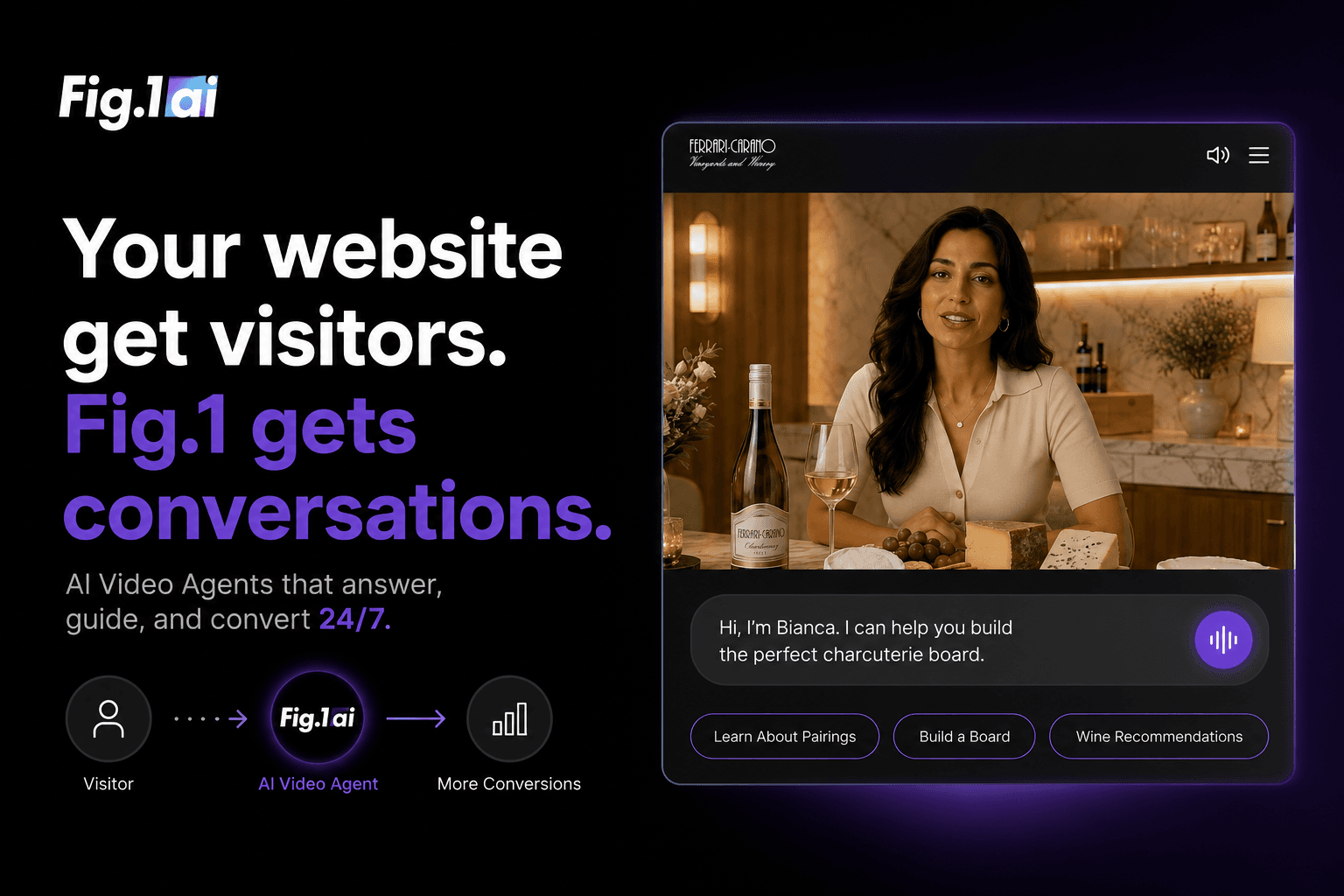
At Fig1, we call this a Brand Agent: an AI-powered representative of your brand that lives on your site — and anywhere else your customers show up — trained on your actual content, products, and voice. It answers instantly, it shows using your real video and rich media instead of just text, and it captures and reports on every conversation it has. It’s not a chatbot bolted onto a support page. It’s built to be a member of the sales team that happens to never sleep.
Before and after, in practice
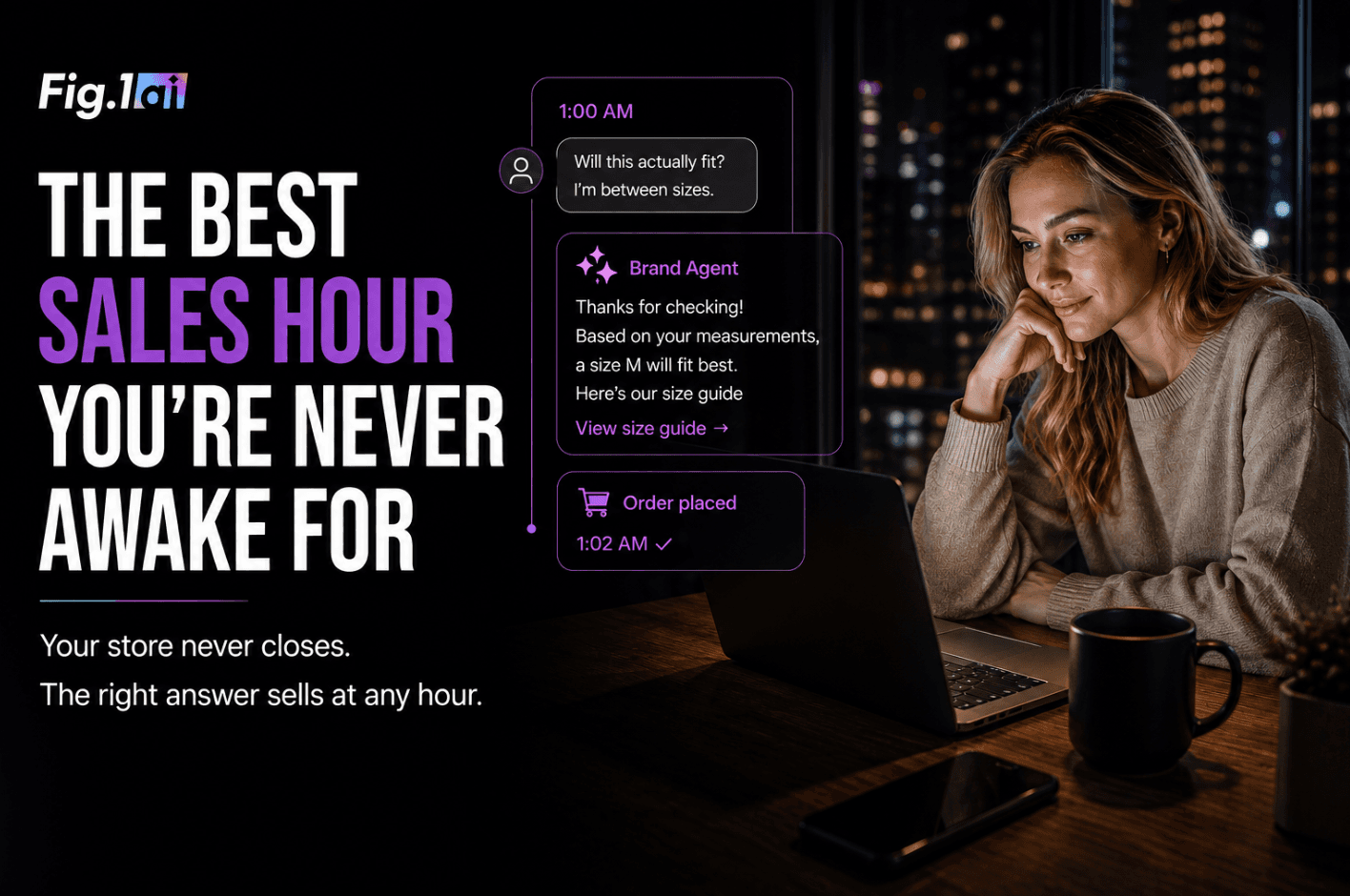
Take a direct-to-consumer brand selling a physical product online. Before: a visitor lands at 11pm with one question — does this work with what I already own? No one’s there to answer, and most visitors leave rather than wait for a next-day email reply. After: a Brand Agent answers instantly, shows a short product video that settles the question, and captures the visitor as a warm lead before they leave the page.
Or take a B2B software company. Before: a prospect reads the homepage, has three follow-up questions the page doesn’t answer, and books a demo just to get those three answers — a 30-minute meeting for something that could have taken 30 seconds. After: the Brand Agent answers the three questions on the spot, and the demo that does get booked is with someone who already knows they want to buy.
Same site. Same content. Completely different outcome — because the site stopped being passive.
The site is the salesperson now
None of this is about replacing people. It’s about admitting that the least accountable, least adaptive, least followed-up-on part of most companies’ sales process is the one asset that’s live in front of every single visitor: the website. Brand Agents don’t add headcount. They give the site the job description every other salesperson already has.
Build accordingly.