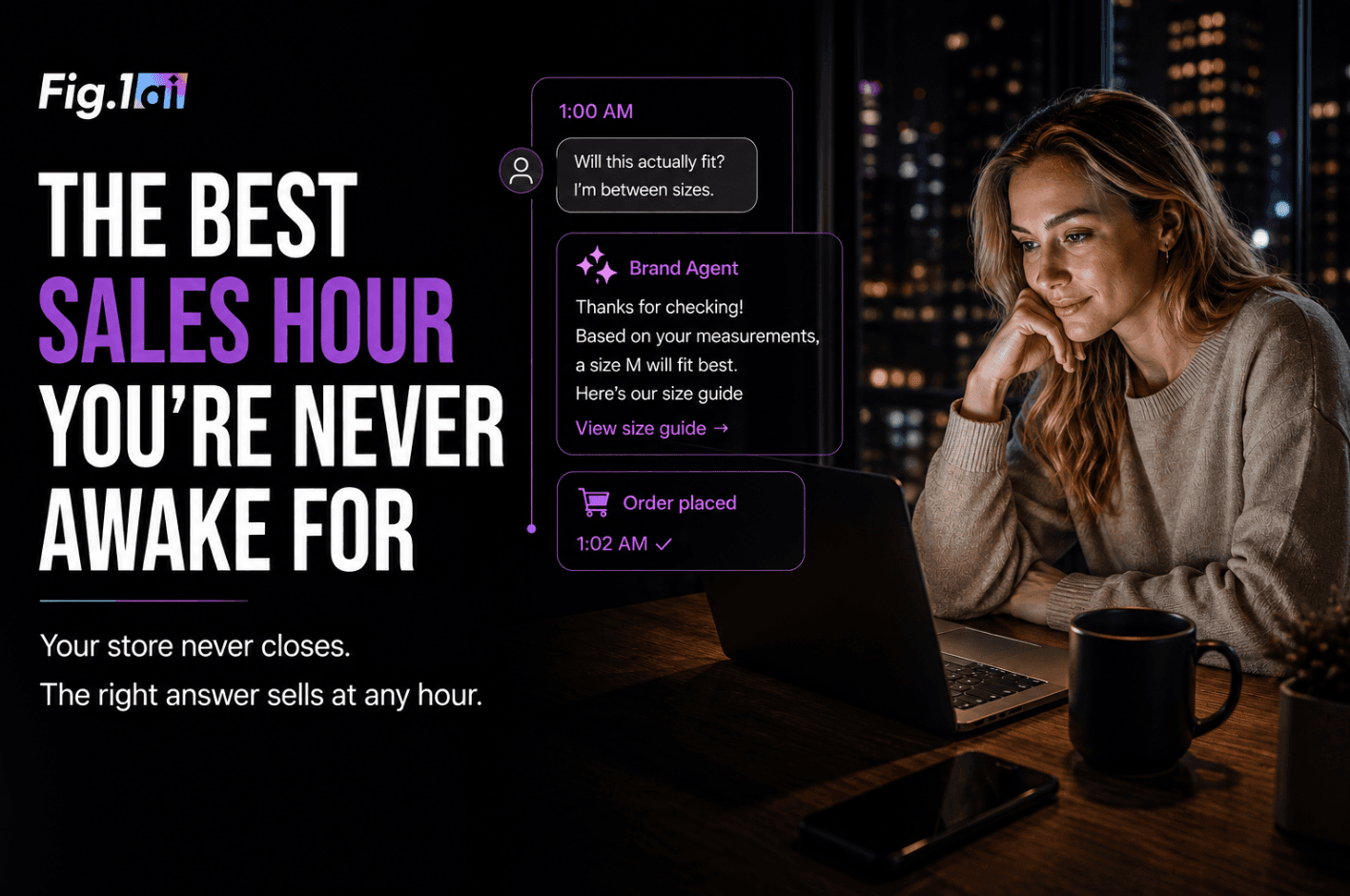
Most website chatbots were built to solve customer problems, not help customers make purchasing decisions. That distinction could be costing businesses sales.
Imagine walking into a store, finding something you like, and asking an employee which version would work best for you. Instead of recommending a product, they hand you a stack of instruction manuals.
Technically, they’ve given you information. But they haven’t helped you buy anything.
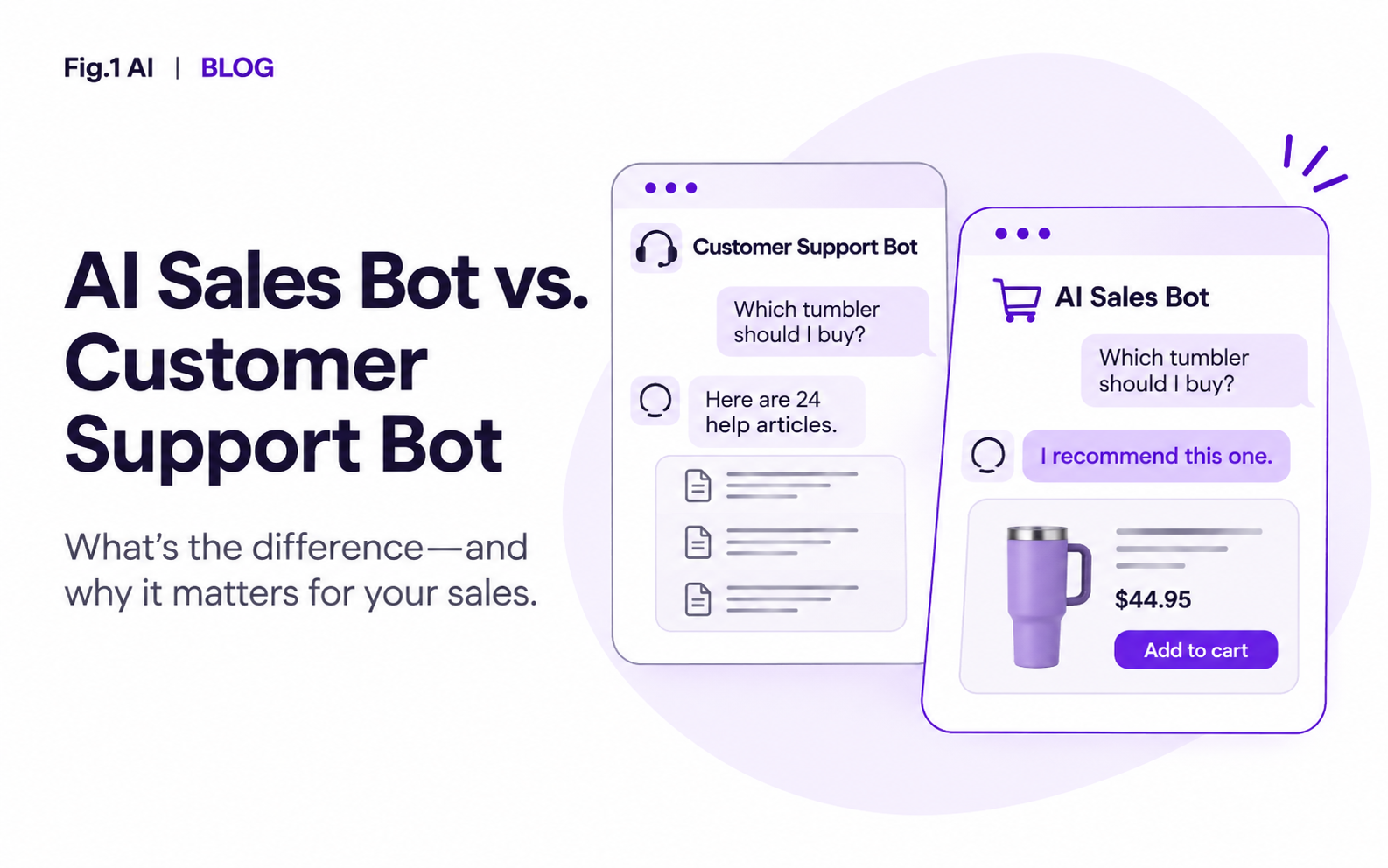
That’s essentially how many website chatbots still operate. They can find a return policy, explain shipping timelines, and point customers toward FAQs. But ask them which product to choose, and the conversation often ends with a list of links.
For years, businesses have invested in AI chatbots to make customer support more efficient. Now there’s a bigger opportunity: using AI to help customers make decisions before they leave your website.
What Is the Difference Between an AI Sales Bot and a Customer Support Bot?
A customer support bot helps people resolve questions or problems. An AI sales bot helps people evaluate options, choose products, and take the next step toward purchasing. Both can use conversational AI and both can answer questions, but their priorities are different.
A customer support bot:
- Answers FAQs
- Explains returns and shipping
- Directs visitors to help articles
- Focuses on resolving inquiries
- Often measures ticket deflection
- Typically responds to questions
An AI sales bot:
- Helps customers choose products
- Recommends based on customer needs
- Provides personalized buying guidance
- Focuses on moving shoppers toward a decision
- Measures engagement, purchase intent, and conversion
- Can ask questions to understand needs
Neither approach is inherently better. A customer trying to return a damaged product needs support, not a sales pitch. But a shopper deciding between three products needs something different. The problem begins when a business expects a support chatbot to do the job of a salesperson.
Most Website Chatbots Were Built for Customer Support
Open the chat widget on almost any ecommerce website. You’ll probably see options such as track my order, returns and exchanges, shipping information, warranty questions, and contact support. These are useful features, but almost every option is designed for someone who has already made a purchase.
Traditional website chat tools were largely adopted to help customer service teams manage inquiries, reduce repetitive work, and make support more accessible. Their success was often measured by how many questions they resolved without human intervention.
That created a blind spot: what happens to the customer who hasn’t purchased yet? The person comparing products, wondering whether something is worth the price, or choosing a gift? These aren’t customer support problems. They’re sales opportunities.
The Most Valuable Question Your Chatbot Might Be Missing
“Which one should I get?” It’s a simple question, but it tells you the shopper is interested, considering a purchase, and looking for confidence.
In a physical store, a good salesperson asks a couple of questions and makes a recommendation. Online, that shopper might receive product pages, search results, or FAQ articles instead. Every additional step creates another opportunity to abandon the purchase.
Imagine someone shopping for a travel tumbler who asks which one is best for taking coffee to work. A support bot might return specifications and articles. An AI sales bot could ask whether they need something leakproof for a bag or something that fits a car cup holder. It could then recommend a specific product, explain why, show a photo and price, and provide a purchase link. Same customer. Same question. A very different shopping experience.
What Does an AI Sales Agent Actually Do?
1. Understands what the customer needs
A shopper may need running shoes for long distances, a gift for a parent, or skincare for sensitive skin without knowing the exact product. A good agent asks a few relevant questions, not a lengthy questionnaire.
2. Makes specific product recommendations
Showing 30 products is not the same as recommending three relevant options. A sales agent uses accurate product information and customer preferences to suggest options and explain the reasoning.
3. Brings the product into the conversation
Product images, pricing, details, and purchase links can appear directly in the conversation so customers do not have to restart their search.
4. Handles objections before they become reasons to leave
Questions about price, sizing, compatibility, shipping, and product differences can be answered with approved information. A trustworthy agent acknowledges what it does not know.
5. Knows when to move the conversation forward
The right next step might be a product link, checkout, a qualified lead, or an appointment. The difference is not just how intelligently a bot responds. It is what happens after the answer.
Why AI Sales Bots Matter Beyond Ecommerce
Service businesses face the same problem. Someone visits a tutoring center’s website and asks about lesson prices. A prospective gym member wants to compare memberships. A homeowner wants to know whether a service fits their budget. These are often buying questions disguised as requests for information.
Across live Fig.1 AI agents serving tutoring centers and gyms, approximately one in five typed conversations began with a pricing question over a recent 30-day period. For the gyms in that sample, it was closer to one in three. These figures describe the observed sample, not a universal benchmark.
A bot that responds with “Please fill out our contact form” adds another step. An AI sales agent can provide available pricing information, explain options, answer follow-up questions, and guide visitors toward booking or purchasing.
AI Sales Bot vs. Customer Support Bot: Do Businesses Need Both?
Yes, but not necessarily as separate chatbots. Customers do not think about whether their question belongs to sales or support. Someone might ask about a product, then shipping, then returns before buying. Those questions should be part of one connected conversation.
A single AI agent can help shoppers discover products, compare options, understand pricing, and make purchases while still answering questions about orders, policies, and services. The experience follows the customer rather than forcing them into separate departments.
How to Tell If Your Website Chatbot Is Helping You Sell
Can it recommend a specific product? Ask it to choose something for a particular need. Does it ask relevant questions and recommend an option, or just return a category page?
Can it answer pricing questions? Does it provide available pricing and explain options, or immediately direct the visitor to a form?
Can it help someone take the next step? After a recommendation, can it offer a relevant purchase link, booking option, or other action?
Does it know the difference between a buyer and an existing customer? Are all the options about orders and returns, or is there a path for visitors who have not bought yet?
These questions do not tell you everything about performance, but they reveal whether the experience is designed to help visitors make purchasing decisions.
How to Measure Whether an AI Sales Bot Is Working
Support teams often track resolution rates, response times, and ticket deflection. Sales-focused agents also need metrics tied to the customer journey:
- Product recommendation engagement: how often visitors interact with suggested products.
- Product click-through rate: how often conversations lead to product page visits.
- Conversion rate: how often engaged shoppers complete a purchase.
- Qualified leads: how many visitors request follow-up or provide relevant details.
- Appointment bookings: how many conversations result in scheduled consultations.
- Revenue influenced: how much purchasing activity can reliably be connected to agent interactions.
Engagement alone does not prove incremental sales. Compare performance against appropriate baselines or controlled tests whenever possible. The real question is not how many conversations your chatbot handled, but whether those conversations helped customers move forward.
The Future of Website Chat Isn’t Just Better Support. It’s Better Selling.
For years, businesses asked: “How many support questions can we automate?” That is still worth asking. But another question deserves attention: “How many customers are visiting our website ready to buy, but leaving because nobody helped them decide?”
A website can have beautiful photography, detailed descriptions, and a functioning checkout. Sometimes the missing piece is simple: a customer has a question, wants a recommendation, and needs reassurance before deciding.
At Fig.1 AI, we build brand agents that do both: answer customer questions and help visitors discover products, evaluate options, and take the next step. Because your website should not just be available to answer questions. It should be ready to help customers buy.