Every year, e-commerce brands spend weeks preparing for Black Friday and Cyber Monday. Advertising budgets increase, promotional emails are scheduled, landing pages are redesigned and discounts are carefully planned.
But one of the most important parts of the online shopping experience is often overlooked: what happens when a customer has a question?
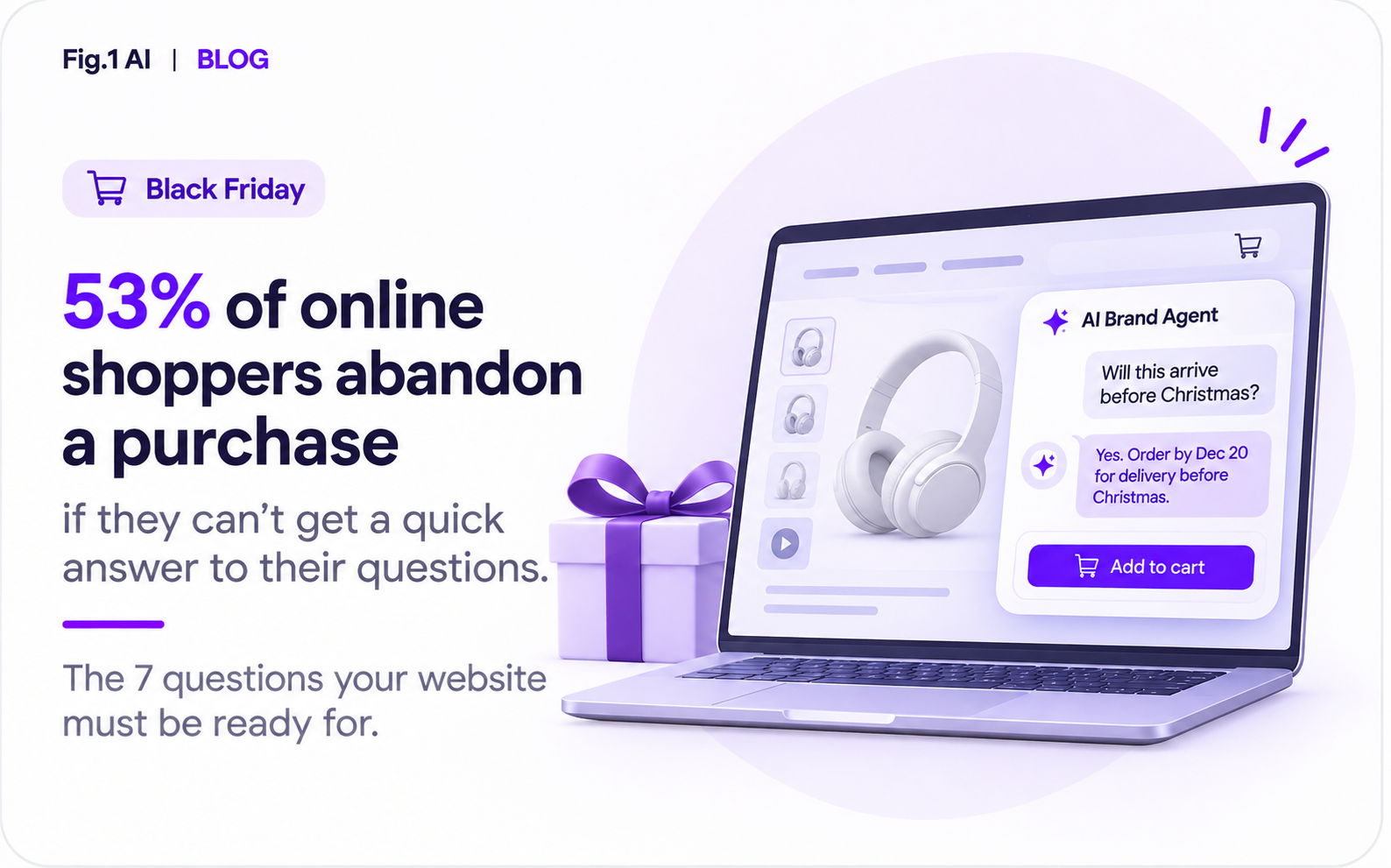
According to Forrester’s 2015 research, 53% of online shoppers are likely to abandon a purchase if they cannot quickly get the information they need.
More than a decade later, shopping cart abandonment remains a significant challenge. Baymard Institute’s 2026 research puts the average online shopping cart abandonment rate at 70.22%.
That’s approximately seven out of every ten shopping carts.
While not every abandoned cart represents a recoverable sale, retailers have an opportunity to address some of the uncertainty that prevents customers from completing a purchase.
And during Black Friday, when shoppers have more choices, less time and competing offers at their fingertips, that opportunity becomes particularly important.
Why Do Customers Abandon Their Shopping Carts?
Shopping cart abandonment isn’t always about price. Sometimes, customers simply don’t have enough information to feel comfortable completing a purchase.
DHL’s 2026 E-Commerce Trends Report highlights several factors that shoppers say can cause them to abandon a purchase:
- 67% cite the delivery offering.
- 58% cite the returns offering.
- 57% cite an invalid or non-functioning discount code.
- 54% cite insufficient product reviews or images.
- 39% cite the absence of chat or customer service options.
Some of these issues require operational changes. Others can be addressed by making existing information easier to find.
A customer may be perfectly happy with your return policy but unable to locate it. They may qualify for free shipping but not realize it. They may be interested in a product but unsure which size to order.
These are moments when a conversation could make the difference between a completed purchase and a lost sale.
Seven Customer Questions Every E-Commerce Website Should Be Ready to Answer on Black Friday
Holiday customer service guides from Shopify, Klaviyo and Gorgias highlight recurring questions retailers encounter during the holiday shopping season.
Here are seven that every e-commerce business should prepare for.
1. Can this arrive in time?
Delivery is particularly important during the holiday season. Customers are often shopping for a specific occasion and need to know whether their purchases will arrive before a particular date.
A generic shipping policy doesn’t always give customers enough information to make that decision.
An AI-powered shopping assistant can explain available shipping options, communicate order deadlines and, when connected to the appropriate systems, provide more personalized delivery estimates.
2. Will this fit me?
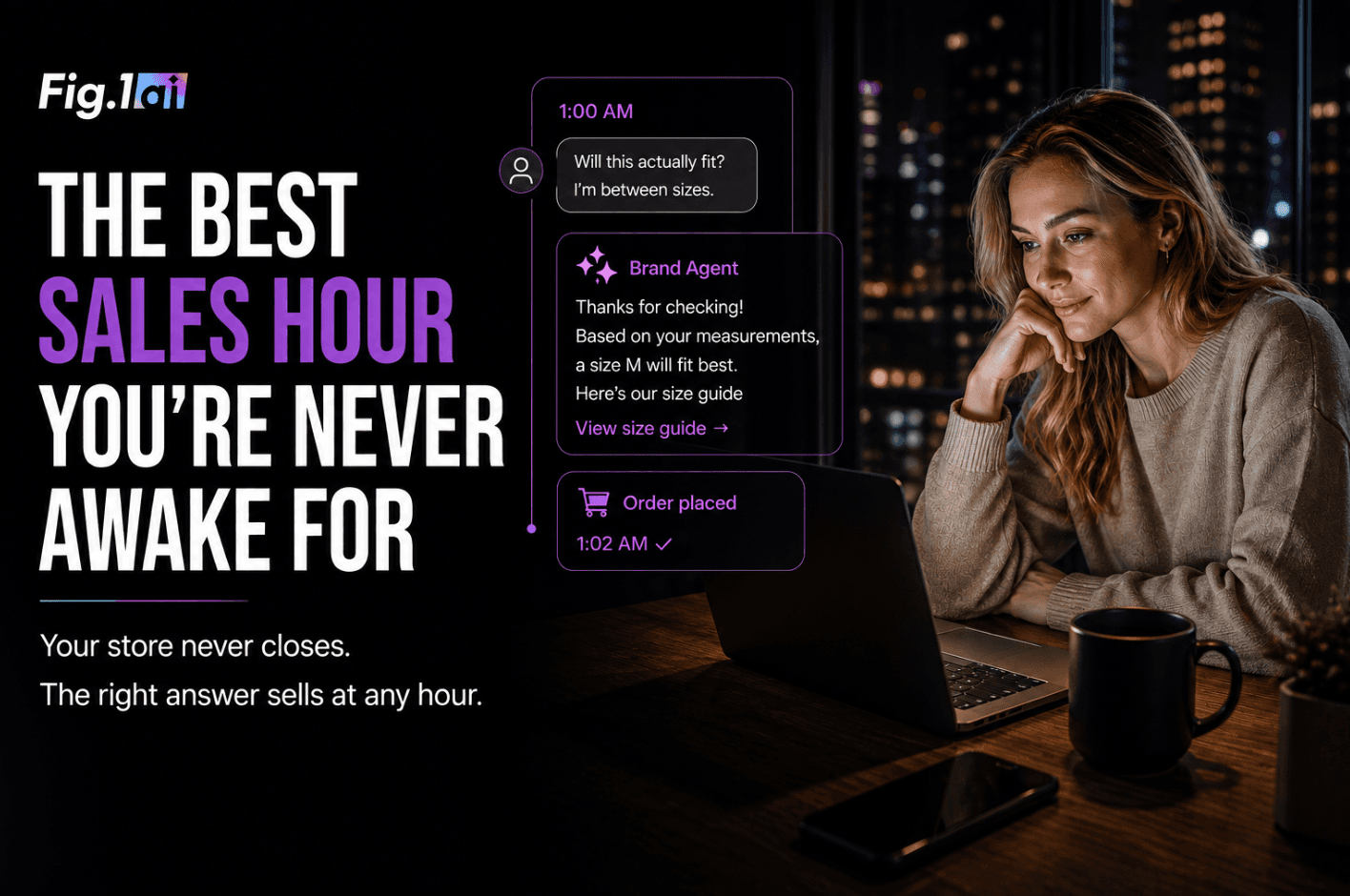
Sizing uncertainty is a common barrier to purchasing clothing, footwear and accessories online.
Even with detailed size charts, customers may need help understanding how a particular product fits or how its sizing compares with another brand.
An AI sales agent can guide customers through sizing recommendations using approved product specifications, fit guides and other available product information.
This can help shoppers make more informed decisions while potentially reducing avoidable returns.
3. Can I combine two discount codes?
Black Friday promotions can get complicated, particularly when retailers run multiple offers alongside loyalty rewards, email subscriber discounts and free shipping incentives.
When a discount code doesn’t work, customers may become frustrated and abandon their carts.
An AI agent trained on current promotional policies can explain which discounts can be combined, which products qualify and whether minimum purchase requirements apply.
Instead of leaving customers to figure it out themselves, the website can provide an immediate explanation.
4. What are the exact terms of this promotion?
Is everything on sale? Are certain collections excluded? When does the promotion end? Does the offer apply to existing customers?
These are straightforward questions, but they can become difficult to manage when thousands of customers visit a website at the same time.
An AI agent can communicate promotional terms consistently across customer conversations, provided it has access to accurate and up-to-date campaign information.
It can also guide shoppers toward eligible products rather than simply redirecting them to a terms and conditions page.
5. Do you think they’ll like this as a gift?
This is where traditional e-commerce customer support often falls short.
A shopper looking for a gift may not know what product they want. They might only know who they’re buying for, what that person enjoys and how much they want to spend.
A conversational AI shopping assistant can ask relevant questions, narrow down available options and recommend products based on the shopper’s preferences.
It brings a familiar part of the in-store retail experience to online shopping: having someone help you find the right product.
6. Can I return this if they don’t like it?
Holiday shoppers are often purchasing products for someone else. They want reassurance that an item can be returned or exchanged if it isn’t quite right.
An AI agent can explain return eligibility, extended holiday return windows, exchange options and relevant restrictions.
Making this information available before checkout can help resolve uncertainty while customers are still considering a purchase.
7. Where’s my order?
Not every Black Friday conversation happens before a purchase.
As order volumes increase, customer service teams can quickly become overwhelmed by order status and delivery questions.
An AI customer service agent integrated with order management or tracking systems can help customers access relevant order updates securely.
Automating routine inquiries can also give customer service teams more time to handle complex issues that require human attention.
The Difference Between an E-Commerce Chatbot and an AI Sales Agent
Many online stores already have a chatbot. But having a chatbot doesn’t necessarily mean that a website is equipped to help customers shop.
Traditional customer support chatbots are primarily designed to resolve issues, answer frequently asked questions or direct customers to the appropriate support channel.
An AI sales agent serves an additional purpose: helping customers make purchasing decisions.
A traditional customer support chatbot:
- Answers frequently asked questions
- Directs customers to support resources
- Typically reacts to customer issues
- Provides general information
- Focuses on issue resolution
- Often relies on predefined conversation flows
An AI sales agent:
- Answers product-specific questions
- Guides customers through purchasing decisions
- Engages customers during product discovery
- Offers personalized product recommendations
- Supports sales and conversion
- Supports natural, context-aware conversations
Both have a role in e-commerce. But during high-traffic shopping events like Black Friday and Cyber Monday, relying exclusively on customer support automation can mean overlooking valuable sales opportunities.
Your website needs to support customers before, during and after a purchase.
How AI Agents Can Help Reduce Shopping Cart Abandonment
AI agents can help retailers address some of the barriers that prevent online shoppers from completing purchases.
Provide immediate answers, 24/7
Online shoppers don’t follow traditional business hours. They shop late at night, early in the morning, on weekends and across different time zones.
An AI agent makes assistance available even when customer service teams are offline.
Turn product questions into sales conversations
When a customer asks whether a product is suitable for a particular purpose, they’re expressing interest.
An AI sales agent can answer the question, explain relevant product benefits and recommend suitable alternatives when appropriate.
Make online shopping more interactive
Product descriptions and static images are useful, but they don’t always answer every customer’s question.
AI Brand Agents can incorporate product demonstrations, videos, images and direct product links into conversations, helping shoppers explore products without having to navigate multiple pages.
Support higher traffic without overwhelming your team
During Black Friday, retailers may experience a significant increase in customer inquiries.
AI agents can handle multiple conversations simultaneously, helping businesses maintain responsive customer service without depending entirely on additional staffing.
Identify why customers aren’t converting
Customer conversations can reveal valuable information that traditional website analytics may miss.
If customers repeatedly ask about delivery times, sizing, missing product details or promotional restrictions, those questions may highlight opportunities to improve the website and purchasing experience.
Conversational analytics can help retailers identify these patterns and make more informed decisions about merchandising, marketing and website content.
How to Prepare Your E-Commerce Website for Black Friday
Before increasing your advertising spend or launching another promotional campaign, take five minutes to experience your website from a customer’s perspective.
Open your website on your phone. Find a product you’re interested in and start asking questions.
Can you get an immediate sizing recommendation? Can you find out whether a discount applies? Can you understand the return policy without leaving the product page? Can you get help choosing a gift?
Then try the same exercise outside your normal business hours.
Pay attention to how many steps it takes to get an answer, whether the information is accurate and how easy it is to continue shopping afterward.
Every unnecessary step introduces friction into the customer journey.
Reducing that friction should be as much a part of your Black Friday strategy as your advertising and promotions.
Frequently Asked Questions
What is the average shopping cart abandonment rate in 2026?
According to Baymard Institute’s 2026 research, the average documented online shopping cart abandonment rate is 70.22%. Individual abandonment rates vary by industry, device, customer intent and checkout experience.
How can e-commerce businesses reduce cart abandonment?
Retailers can reduce avoidable cart abandonment by improving checkout usability, displaying shipping costs upfront, communicating return policies clearly, providing accurate product information and offering immediate customer assistance.
Can AI chatbots reduce cart abandonment?
AI chatbots and AI sales agents can help address avoidable abandonment by answering customer questions, explaining promotions and providing product recommendations during the shopping journey. Their effectiveness depends on the quality of their information, integrations and customer experience.
What is an AI sales agent for e-commerce?
An AI sales agent is a conversational assistant that helps online shoppers discover products, compare options, resolve purchasing concerns and navigate toward checkout. Unlike a traditional support chatbot, it is designed to support purchasing decisions as well as answer questions.
How can AI help retailers during Black Friday and Cyber Monday?
AI agents can automate routine customer inquiries, provide round-the-clock shopping assistance, explain promotional offers, recommend products and help customer service teams manage increased demand.
Make the Most of the Traffic You’re Already Paying For
Black Friday is one of the most competitive shopping events of the year. Every retailer is fighting for attention, investing in advertising and trying to capture a greater share of consumer spending.
But attracting customers is only half the challenge.
The other half is giving them enough confidence to buy.
At Fig.1 AI, we build intelligent AI Brand Agents that bring the personalized experience of in-store shopping to e-commerce websites.
Our agents know your brand, understand your products, communicate your promotions and help customers make informed purchasing decisions. They combine natural conversations with product imagery, video, recommendations and interactive content to create a more engaging shopping experience.
Because your website should do more than display products.
It should help sell them.